Home › Asphalt Pathways, Sidewalks, and Trails
Connect your property with safe routes using asphalt pathway paving in Norfolk, VA. We construct sidewalks, greenway trails, and bike paths for public and private clients. Smooth, even surfaces improve accessibility and user comfort. Contact us to design and pave your next pathway or trail project.
Precision Asphalt Norfolk provides professional asphalt pathway paving throughout Norfolk, VA, Virginia and the surrounding area. Our licensed, insured crew delivers safe, clean, on-time work with a free estimate before anything begins. Call (757) 908-3635 or request your free quote.
Durable Asphalt Pathways, Sidewalks, and Trails in Norfolk, VA
Asphalt pathways, sidewalks, and trails have to do more in Norfolk than simply look good. They need to handle coastal weather, mixed foot and bike traffic, and frequent utility work under our streets. Precision Asphalt Norfolk designs and builds asphalt surfaces that fit how people really use them in neighborhoods, parks, schools, and commercial properties across the city.
We focus on pathways that are smooth, safe, and easy to maintain. Whether you need a short walk from parking lot to front door or a winding multi‑use trail along a retention pond, we look at grades, drainage, nearby trees, and how emergency or maintenance vehicles may need to access the area. Our team lives and works here, so we understand Norfolk soil conditions, low‑lying areas, and the reality of standing water after heavy rain.
Instead of a one‑size‑fits‑all package, we match asphalt mix designs and base thickness to each site. Light residential foot traffic, golf cart paths, and city greenway trails each need different structural support. That local, project‑specific approach is what keeps our paths from raveling, cracking, or holding water within just a few seasons.
How We Build Long‑Lasting Asphalt Paths and Sidewalks
Every asphalt pathway paving project in Norfolk starts with layout and grade checks. We mark the exact path location, confirm width and alignment, and check slopes with a level or laser. In most cases we aim for a minimum 2 percent cross slope so water drains to one side and does not sit on the walking surface.
Next, we remove any grass, topsoil, old pavement, or brick. For new paths we typically excavate 6 to 10 inches, depending on soil conditions and the expected use. In lower parts of Norfolk where soils are softer or hold more moisture, we may remove additional material and install a thicker stone base to prevent future settling.
A compacted aggregate base is the backbone of a good walkway. We spread crushed stone, usually a 21A or similar blend, then compact it in lifts with plate compactors or rollers. We check elevations again to be sure the finished base has the proper pitch away from buildings, playground equipment, or benches.
Only after the base is properly compacted do we place the asphalt. For walkways and light multi‑use trails, we typically install 2 to 3 inches of surface asphalt, either in a single lift or two lifts if the design calls for it. The asphalt is placed hot, then compacted with rollers and hand tampers around edges and tight curves so there are no weak spots that break down early.
Finally, we handle joints and edges carefully. Where a new asphalt path meets existing concrete or asphalt, we saw‑cut and feather the connection so there is no trip edge. Along turf, we may install a small shoulder of topsoil and seed for a clean, stable transition.
Design Options for Paths, Sidewalks, and Recreational Trails
Designing an asphalt pathway is about more than drawing a line from point A to point B. Precision Asphalt Norfolk works with homeowners, HOAs, business owners, and property managers to tailor each layout and surface to the way people will actually use the space.
Width is the first decision. A simple residential side path to a backyard gate may be 3 to 4 feet wide. Neighborhood walking paths and school routes usually work best at 5 to 6 feet, which lets two people walk side by side. Multi‑use recreational trails that need to accommodate bikes, strollers, and joggers often start at 8 to 10 feet wide.
We can adjust the asphalt mix and surface texture as well. For bike‑friendly trails we use a finer top mix that feels smoother under tires. Near playgrounds and senior living communities, we lean toward mixes that give a bit more surface texture and grip to reduce slipping when the path is wet. In shaded or low areas that tend to stay damp, we pay close attention to slope and drainage so algae and moss are less likely to grow.
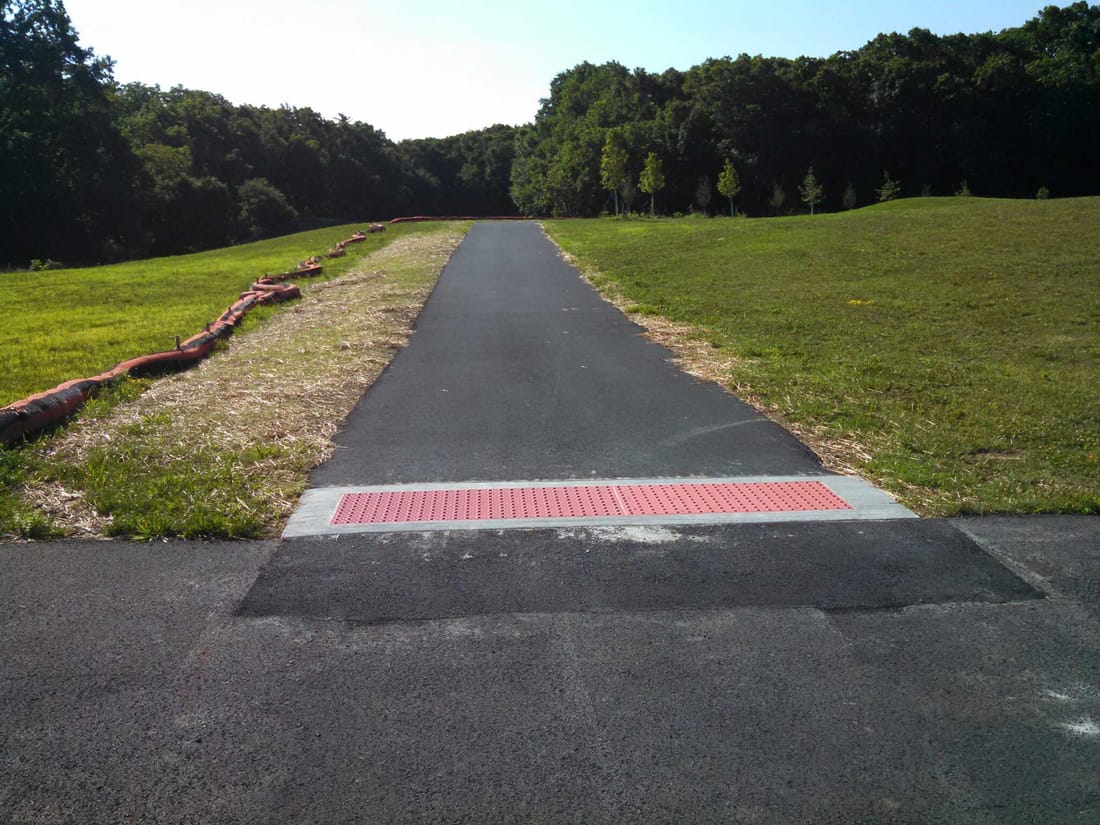
Curves, intersections, and crossings also need thought. On busier trails we widen inside curves slightly and provide clear sightlines so walkers and cyclists can see each other. At parking lot crossings, we can integrate raised asphalt crosswalks, contrasting coatings, or reflective markings so drivers notice pedestrians.
If you are working within a landscape plan, we coordinate with your designer or landscaper to route paths around large tree roots, irrigation lines, and lighting. Where roots cannot be avoided, we may suggest slight grade changes or root pruning with root barriers so the pavement stays smooth for longer.
What Affects the Cost of Asphalt Pathway Paving in Norfolk
Project cost depends on more than just length and width. When we price an asphalt pathway or sidewalk in Norfolk, we look at site conditions, access, use, and any special features.
Base preparation is a major driver. A path built over firm, well‑draining soil with easy equipment access will cost less than a path in a low, soggy backyard that requires additional excavation, stone, and stabilization fabric. If heavy equipment cannot reach the area and more work must be done by hand, that affects labor time.
Thickness and asphalt type matter as well. A residential footpath may only need a 4 to 6 inch stone base and a 2 inch asphalt surface. A shared‑use trail that may see maintenance vehicles, golf carts, or service trucks often requires a thicker base and 3 or more inches of asphalt, which adds both materials and labor.
Layout complexity is another factor. Straight paths along a building are efficient to build. Curving, meandering trails around ponds, trees, and play areas involve more handwork, additional edge shaping, and more precise grading. If your project includes features like raised crosswalks, ADA ramps, or decorative borders, we include those details in the pricing breakdown.
To keep surprises to a minimum, Precision Asphalt Norfolk provides itemized estimates that separate excavation, base stone, asphalt paving, and extras such as striping or coatings. We also talk through options that can help you stay within budget, like adjusting the route slightly to avoid deep excavation or staging the project in phases.
Dealing With Common Issues: Drainage, Roots, and Cracking
Norfolk’s coastal climate and tree‑lined streets present a few recurring challenges for asphalt pathways and sidewalks. We address these issues directly in planning and installation so you do not end up with constant repairs.
Poor drainage is the most common problem we see. If water sits on a path after rain, the surface ages faster and can turn slippery. We prevent this by designing in proper slopes and, where needed, adding shallow swales or small catch basins beside the path. On properties near marshy ground or retention ponds, we may recommend a thicker stone base that allows water to move through and away from the pavement.
Tree roots are another concern. Large oaks and maples can push up a path within a few years if roots are not considered. Before we pave, we walk the route and note nearby tree sizes and distances. When roots must be crossed, we can raise the path slightly, use selective root pruning, or add root barrier materials so new roots are less likely to grow directly under the asphalt.
Cracking and raveling (where the top layer starts to lose stones) usually show up when a path was built on a weak base or with an asphalt mix not suited to the use. For existing problem paths, we can mill and overlay the surface or, in more severe cases, remove and rebuild sections with the right base and mix. When we install new work, we use compaction testing and thickness checks so these issues are much less likely to appear in the first place.
Best Time of Year to Schedule Path and Trail Paving in Norfolk
Temperature and weather make a real difference in asphalt quality. In Norfolk, the most reliable paving windows for pathways and sidewalks are typically from late March through early June and from late September through early November. During these periods, daytime temperatures are warm enough for proper compaction, and the nights are not so hot that the surface stays soft for too long.
Summer paving is also possible, and we complete many projects in June, July, and August. For those jobs, we pay extra attention to scheduling and safety. We often start earlier in the day to avoid extreme midday heat, which helps the asphalt set properly and is safer for our crew and your property users.
Winter is more limited. If surface temperatures are too low, asphalt cools before it can be compacted properly. That leads to weak spots and shorter lifespan. On mild winter days, we can sometimes tackle smaller pathway repairs or overlays, but full new installations are usually planned for warmer stretches.
If you have a school, HOA pool area, or commercial site with specific downtime windows, we recommend reaching out several weeks ahead. This allows us to align material delivery, crew availability, and weather forecasts so your asphalt pathway paving is done efficiently, with minimal disruption to residents or customers.
What to Expect When You Work With Precision Asphalt Norfolk
We aim to make your pathway, sidewalk, or trail project straightforward from first visit through final walkthrough. The process starts with an on‑site meeting where we walk the route with you, talk about how people will use the path, and note any problem areas like low spots, steep grades, or root zones.
After that visit, we prepare a clear proposal that includes layout notes, approximate path lengths and widths, base and asphalt thickness, and any special elements like ramps or crossings. We are happy to provide alternate options, for example a basic walking path plan and an enhanced multi‑use trail plan, so you can choose what fits your goals and budget.
Before work begins, we handle layout, call in utility locates where needed, and communicate the schedule. During construction, we keep access paths open as much as possible and coordinate with you on any temporary closures so residents, staff, or customers know what to expect.
When paving is complete, we walk the project with you to check slopes, joints, and finishes. We explain how long to keep traffic off the new surface, simple maintenance steps like edge trimming and cleaning, and when to call us if you notice anything concerning. Our goal is not just a finished path, but a long‑term walking, biking, or access route that serves your property well in Norfolk’s climate.