Home › Commercial Asphalt Resurfacing & Overlays
Extend the life of your paved assets with commercial asphalt resurfacing in Norfolk, VA. We perform overlays and mill and overlay projects for lots and drives. Our crew evaluates base conditions to confirm resurfacing is the right choice and plans phasing to limit downtime. Request a site visit and written resurfacing proposal today.
Precision Asphalt Norfolk provides professional commercial asphalt resurfacing throughout Norfolk, VA, Virginia and the surrounding area. Our licensed, insured crew delivers safe, clean, on-time work with a free estimate before anything begins. Call (757) 908-3635 or request your free quote.
Commercial Asphalt Resurfacing & Overlays in Norfolk, VA
If you manage a commercial property in Norfolk, you already know the pavement never rests. Sun, tidal moisture, delivery trucks, and constant traffic wear down your asphalt long before the base underneath fails. That is where commercial asphalt resurfacing and overlays from Precision Asphalt Norfolk come in. We rebuild the driving surface without the cost and disruption of tearing everything out.
Resurfacing is a good fit for shopping centers, office parks, industrial yards, multifamily communities, churches, and schools when the existing pavement is worn, cracked, or lightly rutted, but the stone base and lower asphalt layers are still structurally sound. In many Norfolk lots, we find the top 1.5 to 2 inches are tired, but the base was built well. In those cases, an overlay can add another 8 to 15 years of life at a fraction of full reconstruction costs.
Our approach is practical. We start by helping you decide if resurfacing is truly the right move or if you are throwing good money over bad base. We walk the site with you, note drainage issues, soft spots, and traffic patterns, then give clear options and time frames so you can plan around your business schedule.
How Our Commercial Resurfacing & Overlay Process Works
A successful overlay depends on preparation. At Precision Asphalt Norfolk, we follow a step-by-step process that is tuned to local conditions around Norfolk, including the way our clay soils and coastal weather affect pavement.
1) Site assessment and core sampling. For larger lots or areas with suspected base problems, we recommend taking a few cores. We extract a 4-inch plug of pavement so we can see the thickness and condition of each layer and the stone base. This tells us if resurfacing is sensible or if some areas need full-depth repair.
2) Milling and edge tie-ins. Before we place a new surface, we typically cold mill (grind) 1 to 2 inches of the old asphalt at transitions, such as gutter lines, handicap ramps, building entrances, loading docks, and around drains. This keeps your new overlay flush with existing concrete without creating trip lips or puddles. In some smaller commercial drives we may use edge grinding instead of full-lane milling to control cost while still creating clean joints.
3) Full-depth and patch repairs. We cut out any alligator-cracked or pumping areas, excavate down to stable stone, then rebuild with compacted aggregate and new asphalt in lifts. Putting an overlay on top of failed spots will only mirror the cracks back through, so this step is critical for performance.
4) Cleaning, leveling, and tack coat. We power sweep and blow the surface clean so the new asphalt can bond properly. In areas with ponding, we use a leveling course to correct low spots. Then we apply a hot tack coat, an asphalt emulsion that bonds the overlay to the old pavement. Skipping or skimping on tack is a common shortcut that leads to slippage and delamination, so we document this step on our jobs.
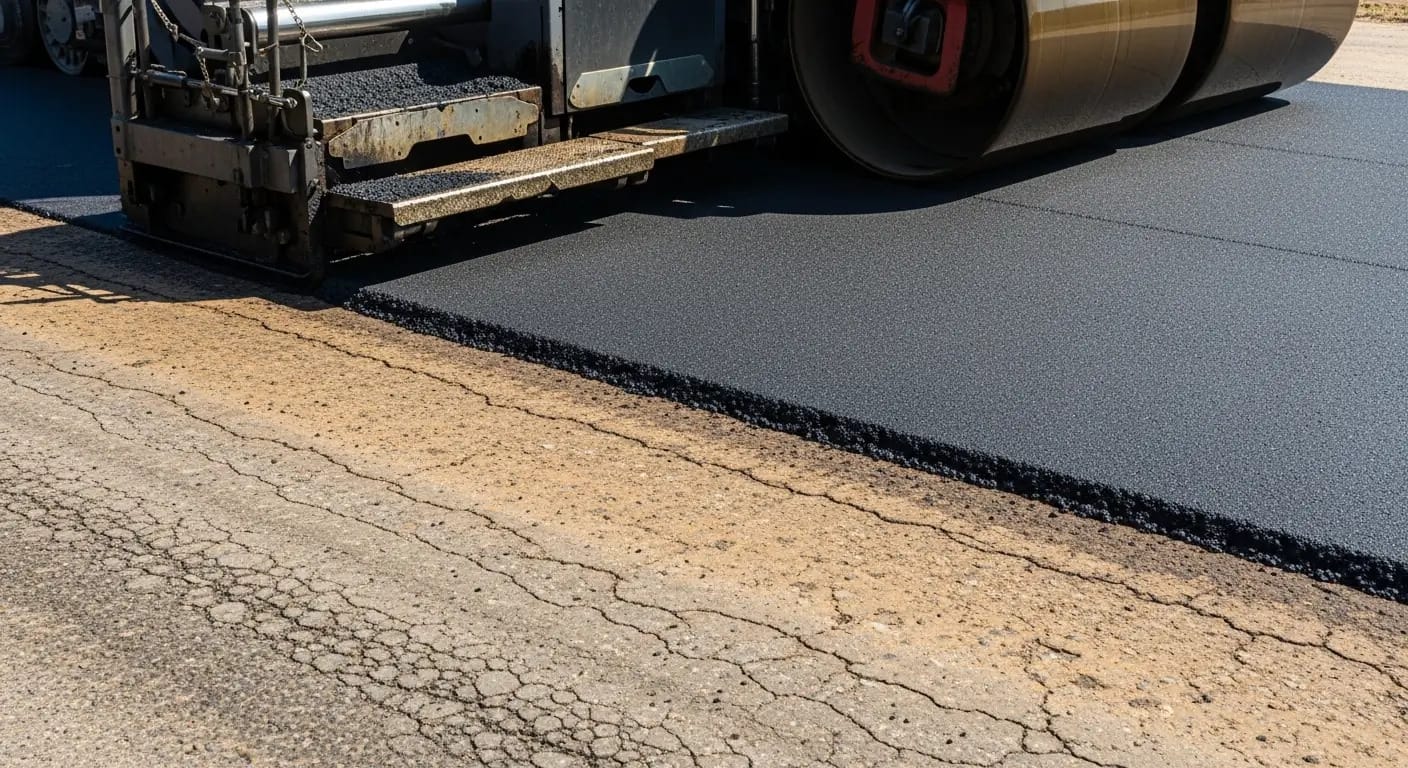
5) Hot mix asphalt installation. For most Norfolk commercial overlays we install 1.5 to 2 inches of state-approved hot mix asphalt using a commercial paver. High-traffic or truck areas like drive lanes and loading zones often get a heavier surface mix with more stone and a 2 to 3 inch thickness to better resist rutting and shoving.
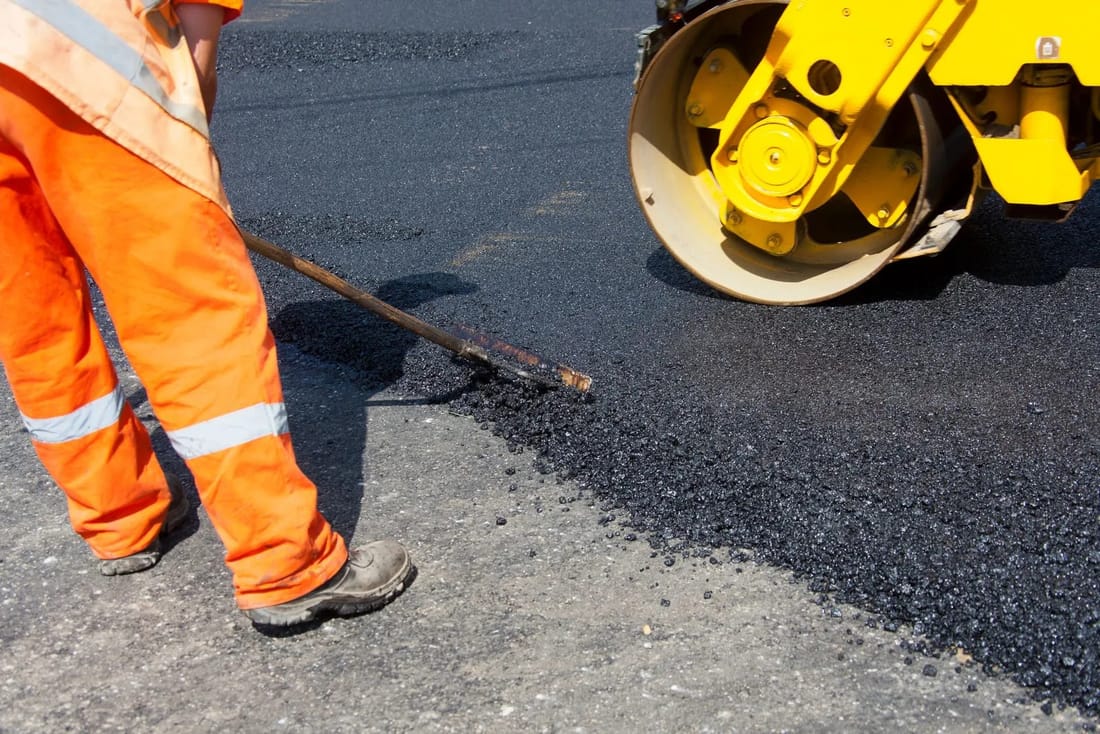
6) Compaction and finishing. We compact with a combination of vibratory steel drum rollers and smaller finish rollers to hit proper density without leaving marks at transitions. After cooling, we restripe the lot and reinstall wheel stops, signage, and any bollards we removed so your site is ready for customers and deliveries.
Material Options, Design Choices, and Norfolk-Specific Considerations
Commercial asphalt resurfacing is not one size fits all. Norfolk has a mix of older brick and concrete gutters, varying subgrades from fill to native clay, and frequent coastal rainfall. Precision Asphalt Norfolk adjusts the mix and layout so your overlay holds up in these conditions.
For light-duty parking fields, such as office and standard retail parking, we typically use a Virginia Department of Transportation approved surface mix that balances smooth finish with durability. For bus lanes, dumpster pads, truck courts, and fuel delivery areas, we recommend a heavier-duty mix with a higher stone content and sometimes a thicker overlay. The right mix in the right place is one of the biggest factors in how long your overlay lasts.
Drainage is another design priority. Many Norfolk lots were poured decades ago and have settled so that water sits against buildings or in the middle of drive aisles. When we resurface, we can fine-tune slopes with milling and leveling courses so water sheds toward inlets and gutters instead of standing on the asphalt. This small design step greatly reduces freeze-thaw damage and raveling.
We also pay attention to access and compliance. If your site has marked accessible parking, ramps, and crosswalks, we verify that existing slopes and markings remain compliant after the overlay. We can coordinate with your property manager or HOA on updated site plans when required. In parts of Norfolk close to residential areas, commercial resurfacing work may be subject to noise-time restrictions, so we schedule milling and paving accordingly.
Finally, we discuss future maintenance during the design stage. The thickness and mix we recommend take into account your plans for sealcoating, restriping cycles, and expected traffic growth, such as an upcoming tenant that brings heavier trucks or increased turnover.
What Drives Cost and Timeline for Commercial Asphalt Resurfacing
Property managers and owners in Norfolk usually want to know two things up front: what it will cost and how long the lot will be disrupted. We are direct about both.
Cost for commercial asphalt resurfacing is mainly driven by four factors: overall square footage, the amount of milling and patching required, mix type and overlay thickness, and how complex the layout is. A simple rectangular lot with minimal patching and a standard 1.5-inch overlay costs less per square yard than a tight site with many islands, drainage issues, and heavy truck traffic that requires thicker sections.
Base repairs can be the biggest swing item. If we discover several large failing areas that need full-depth replacement, we will break out those costs so you can see exactly where your money is going. Norfolk soils can hold water, especially in low-lying areas, so soft spots are common near catch basins and at the ends of drive aisles. Addressing those spots before overlaying prevents reflective cracking and early failure.
Timeline depends largely on size and weather. A typical mid-size commercial lot, around 30,000 to 60,000 square feet, often takes 2 to 3 working days, including milling, patching, and paving, plus a short cure period before full traffic returns. We frequently phase larger properties, resurfacing one section or drive at a time so your tenants, customers, or residents always have a way in and out.
We schedule around Norfolk’s coastal weather patterns as much as possible. We avoid overlaying just before heavy rain, and during cooler months we pay attention to surface temperatures so the asphalt has time to compact properly before it cools. If conditions are not right, we will tell you and adjust the schedule rather than rushing a poor-quality job.
To help you budget, Precision Asphalt Norfolk provides detailed written proposals that show proposed thickness, mix type, scope of milling and patching, and any alternates, such as extra thickness in truck routes or phasing options that reduce immediate cost.
When Resurfacing Makes Sense, and How Precision Asphalt Norfolk Helps You Decide
Not every worn parking lot in Norfolk is a good candidate for commercial asphalt resurfacing, and we are straightforward about that. If your lot has widespread base failure, constant standing water, or numerous sinkholes and utility cuts, a full-depth reconstruction or partial reconstruction in problem areas may be the better long-term value. In those cases, simply placing an overlay will hide the problems for a short time, then they will reappear, often worse than before.
Resurfacing is most appropriate when 70 percent or more of the lot is structurally sound, the existing asphalt thickness is sufficient, and drainage can be corrected with milling and localized grade adjustments. We look for solid, tight areas with isolated patches of alligator cracking or rutting. We also consider how long you need the pavement to last before any planned redevelopment or major site changes.
Precision Asphalt Norfolk helps you decide with a combination of visual inspection, optional coring, and honest discussion about your goals. If you are planning to hold a property long-term, we may suggest more robust prep and thicker overlays in key areas. If you are preparing for sale or a near-term tenant changeover, a more modest overlay focused on appearance and safety may make sense.
Before you hire any contractor, ask for details about how they will address base failures, how many inches they will mill and overlay, what mix design they are using, and how they will handle striping, access, and communication with your tenants. We are ready to walk you through our answers to each of those points and give you a clear, practical plan for your commercial asphalt resurfacing project in Norfolk.