Home › Gravel-to-Asphalt Conversions
Upgrade from loose stone to a clean, solid surface with gravel to asphalt driveway conversions in Norfolk, VA. We regrade, compact, and pave over existing gravel drives. The result is less dust, mud, and ruts and a more attractive entry to your home. Schedule a site visit to discuss options and pricing.
Precision Asphalt Norfolk provides professional gravel to asphalt driveway throughout Norfolk, VA, Virginia and the surrounding area. Our licensed, insured crew delivers safe, clean, on-time work with a free estimate before anything begins. Call (757) 908-3635 or request your free quote.
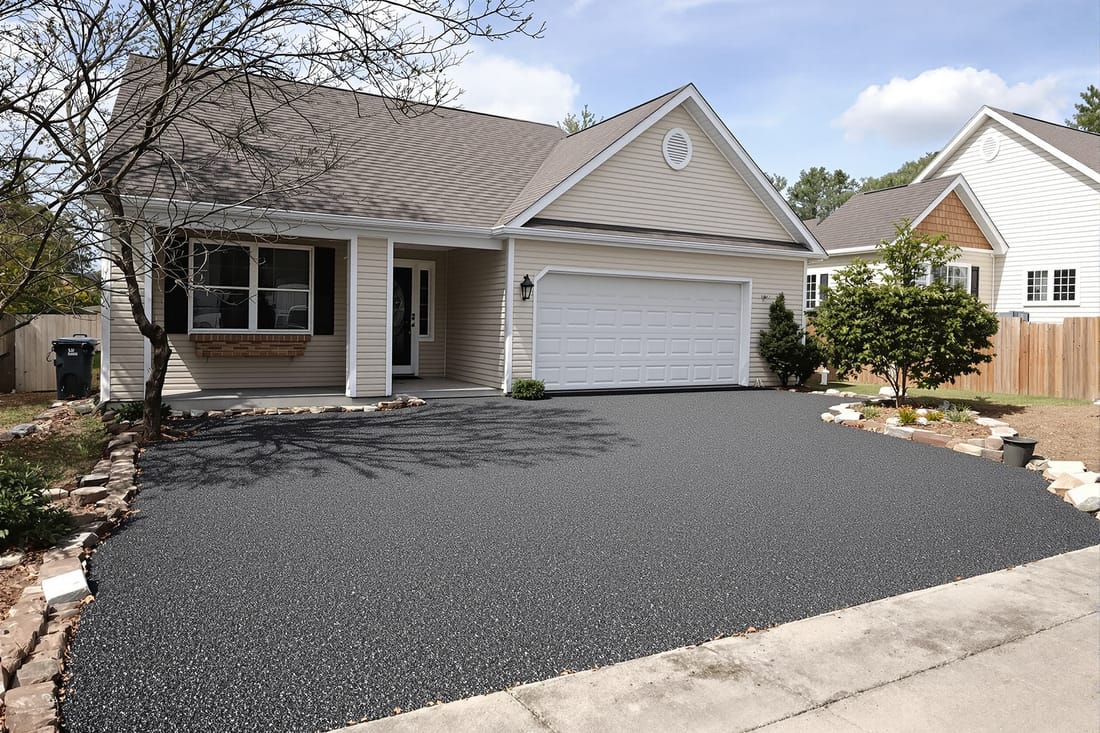
Turn Your Gravel Driveway Into a Smooth Asphalt Surface
If you are tired of ruts, dust, and washouts in your gravel driveway, Precision Asphalt Norfolk can convert it to a clean, smooth asphalt surface that is easier to drive on and much easier to maintain. Our gravel to asphalt driveway conversions are tailored to Norfolk, VA soil conditions, drainage issues, and traffic patterns, not just a one-size-fits-all paving job.
A proper conversion is more than simply covering gravel with blacktop. We start by evaluating the existing base, how the driveway handles rain, and how the surface has been used over the years. In this region, a lot of older gravel driveways have soft spots from our clay soils and standing water after coastal storms. If those issues are not corrected, your new asphalt can crack, sink, or develop potholes in just a few seasons.
At Precision Asphalt Norfolk, we focus on building a solid foundation first, then installing the right thickness and mix of asphalt for your driveway. The result is a cleaner look for your property, better curb appeal, and a surface that handles daily traffic, delivery vans, and the occasional loaded pickup without falling apart. We also help you decide where it makes sense to widen or re-route parts of the driveway before paving, especially around tight turns and parking areas.
How We Convert Gravel to Asphalt in Norfolk, Step by Step
Every gravel to asphalt driveway project begins with a site visit. One of our team members walks the entire driveway with you, notes drainage patterns, looks for soft or pumping spots in the gravel, checks slopes, and asks how you actually use the space. For example, a short city driveway off Colley Avenue is different from a long, winding driveway off Princess Anne Road that needs to handle boat trailers and work trucks.
Once we understand the site, we begin with reshaping and grading. We use graders or skid steers to cut down high spots, fill in low areas, and create a consistent cross slope so water sheds off the driveway instead of sitting in the wheel paths. In Norfolk, where heavy downpours and tidal influences are common, correct grading is one of the most important steps. If needed, we add shallow swales (shaped ditches) along the sides or small berms to steer water away from your home, garage, or carport.
Next, we evaluate the existing gravel base. If the base is too thin or contains a lot of mixed dirt, we will haul in additional compactable stone, usually a crusher run or similar aggregate, then spread and compact it with a vibratory roller. This process locks the stone together to form a dense foundation. On driveways that see heavier trucks or delivery vehicles, we typically recommend a thicker stone base so the asphalt has strong support.
After the base is prepared and compacted, we apply a tack coat if needed to help the new asphalt bond. Then we place hot mix asphalt using a paver or by carefully spreading and raking in tighter areas. For most residential gravel to asphalt driveway conversions in Norfolk, we install 2.5 to 3 inches of compacted asphalt, but we may recommend thicker sections at the entrance near the street or in turn-around areas that see more stress. Finally, we roll the asphalt with a steel drum roller to achieve a smooth, even surface, and we shape the edges so water flows off correctly and you have clean, finished borders.
Design Choices, Asphalt Options, and Cost Drivers
When you convert from gravel to asphalt, you have choices in how the driveway looks and performs. During our planning conversation, Precision Asphalt Norfolk can help you decide on the width of the driveway, whether to add a parking pad or turn-around, and how tight or gentle your curves should be to make getting in and out easier.
On many Norfolk homes, the driveway is also a key part of the overall look from the street. We can square up ragged gravel edges, define neat transitions to sidewalks or patios, and create a clean connection to the city street. For higher-end projects, we can prepare the asphalt edges so you can add pavers or landscaping borders later without affecting the pavement itself.
In terms of asphalt itself, most residential gravel to asphalt driveway projects use a standard hot mix surface that balances cost and durability. For driveways that see heavier use, such as small commercial properties, rental units, or home businesses, we may suggest a different mix or a two-layer system (a stronger base layer with a finer top layer). These decisions are based on your budget, the type of traffic, and how long you want the surface to last before needing any significant work.
The main factors that affect cost are driveway length and width, how much base work is needed, whether we have to address drainage problems, and any changes to layout. A long rural driveway that needs substantial new stone and grading will cost more than a short in-town driveway that already has a good base. Because Norfolk is relatively flat and has varied soil conditions, we factor in local ground behavior and nearby water tables when we estimate how much preparation is needed. We provide clear, itemized estimates so you can see where your money goes and decide what options make the most sense for your property.
Common Problems With Gravel Driveway Conversions and How We Handle Them
Converting a gravel driveway to asphalt has its challenges, especially in a coastal environment like Norfolk. One frequent issue we see is poor drainage, where water collects in low spots or at the end of the driveway near the road. If this is ignored, your new asphalt can develop alligator cracking or potholes in those same areas. Precision Asphalt Norfolk addresses this by adjusting slopes, adding compacted stone where needed, and, if necessary, cutting shallow channels or installing simple drainage solutions so water has a clear path away from the pavement.
Another common problem is unstable subgrade under the gravel. In parts of Norfolk, especially where there is clay or fill material from older construction, the soil can move when it gets wet. You may notice your current gravel drive has areas that feel soft underfoot after a rain. In those spots we may undercut the soft material, bring in more suitable stone, and compact in layers until we have a solid base. On the most problematic sections we may use a geotextile fabric between the soil and stone to keep the base from mixing with the underlying soil.
We also pay close attention to tie-ins, the places where your new asphalt meets the city street, your garage slab, or a sidewalk. If these transitions are not handled with the right heights and tapers, you can end up with trip hazards, puddles, or a bump you feel every time you pull in. Our crews saw cut or mill the connection to the street when needed, and we carefully match elevations at garage doors so water drains out, not in.
Finally, we help you avoid early wear and tear by explaining the curing process and realistic expectations. Fresh asphalt is more flexible for the first several months. We recommend avoiding tight turning of heavy vehicles in the same spot, parking in different places when possible, and postponing any heavy stationary loads like dumpsters until the surface has had time to fully harden. We also go over optional sealcoating schedules once the asphalt has aged appropriately so you can extend the life of your investment.
What Norfolk Homeowners Should Know Before Hiring an Asphalt Contractor
Before you choose a contractor for your gravel to asphalt driveway project, it helps to know what to ask and what to expect. In Norfolk, local experience matters because of our weather patterns, salt exposure from nearby waterways, and varying soil types from neighborhood to neighborhood. Precision Asphalt Norfolk has converted driveways on tight city lots, older brick homes, and large suburban or semi-rural properties, so we understand how to adapt the work to each setting.
You should ask any contractor how thick the asphalt will be after compaction, what type of base preparation they include, and how they plan to handle drainage. If the answer is vague, or if they are simply planning to pave directly over loose gravel without compaction and grading, that is a warning sign. A well-built gravel to asphalt driveway should have a clearly described base layer, a specified asphalt thickness, and a plan for managing water.
It is also wise to clarify timing and access. We let you know how long the work will take, when you can drive on the new surface, and any special considerations if you have delivery schedules or health-related access needs. Most residential driveway conversions can be driven on within 24 to 48 hours, although we recommend avoiding very sharp turns and heavy equipment for a little longer.
Permits are another consideration. In some parts of Norfolk, especially where your driveway connects to a city street or crosses a sidewalk, there may be local rules that apply. We can help you understand which requirements affect your project and coordinate any necessary approvals.
When you are ready to explore a smoother, cleaner, and more durable surface, Precision Asphalt Norfolk is available to walk your property, discuss options, and provide a detailed estimate for your gravel to asphalt driveway conversion. Our goal is a driveway that looks good, drains correctly, and holds up to daily use in Norfolk's real-world conditions, not just on paper.