Home › Industrial and Heavy-Duty Asphalt Paving
Handle heavy loads with confidence using industrial asphalt paving in Norfolk, VA. We design and install thick, reinforced asphalt sections for truck yards, loading docks, and warehouse areas that resist rutting and deformation.
Precision Asphalt Norfolk provides professional industrial asphalt paving throughout Norfolk, VA, Virginia and the surrounding area. Our licensed, insured crew delivers safe, clean, on-time work with a free estimate before anything begins. Call (757) 908-3635 or request your free quote.
Industrial Asphalt Paving in Norfolk Built for Real-World Abuse
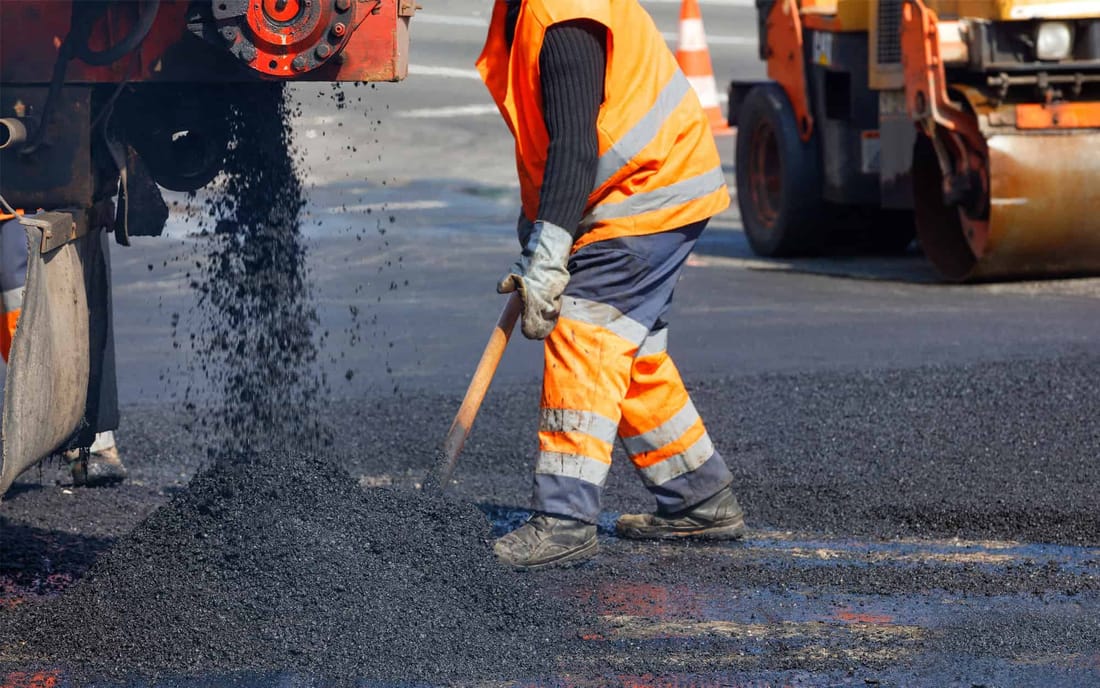
Industrial asphalt paving is very different from paving a driveway or a small parking lot. At heavy truck yards, loading docks, and manufacturing plants in Norfolk, the asphalt has to live with constant loading, turning, and chemical drips every day. Precision Asphalt Norfolk designs and installs pavements that are engineered for that kind of punishment, not just for appearance.
We start by asking detailed questions about your operation: What types of vehicles use the site, from forklifts to fully loaded semis? How many passes per day? Do trucks sit loaded for long periods? Are there fuel or solvent exposure risks? Your answers drive the design. A container yard on the Elizabeth River will not get the same pavement section as a light industrial flex space off Military Highway.
Our team focuses on the full pavement structure: subgrade, stone base, and multiple asphalt lifts with the correct mix designs. For heavy-duty zones we routinely specify thicker base layers, industrial mix types with higher stone content, and full-depth asphalt in areas where concrete used to be the default. The result is a surface that resists rutting, shoving, and early fatigue, even in the heat and humidity of Norfolk summers.
On-Site Evaluation and Pavement Design for Heavy Duty Use
Every industrial asphalt paving project with Precision Asphalt Norfolk begins with a site evaluation, not a guess from a satellite photo. We visit your Norfolk or South Hampton Roads property to inspect soil conditions, drainage patterns, existing pavement failures, and traffic routes.
We probe the subgrade with hand tools or a dynamic cone penetrometer to understand how strong the existing soils are. Tidewater clays and fill along the waterfront are often weak and moisture sensitive, so a section that might work well in Western Virginia would fail quickly here. If needed, we take samples for lab analysis to determine bearing capacity.
Next we map out traffic loading. Loading bays, dumpster pads, and fuel islands get a very different design than employee parking. For each area we determine the total structural number needed, then design the pavement section: thickness of stone base, number of asphalt lifts, and material types. We factor in local conditions like high water tables, frequent summer thunderstorms, and freeze-thaw cycles around curb lines.
You receive a clear written proposal that explains the pavement structure in plain language, not just a lump sum. This includes recommended thicknesses, mix types, and any soil or drainage corrections needed so you understand what you are buying and why.
Heavy-Duty Installation Process, Step by Step
Industrial asphalt paving succeeds or fails based on the work you never see after the surface cools. Precision Asphalt Norfolk follows a detailed sequence for heavy-duty installations.
First we remove existing pavement or unsuitable soils with excavators and skid steers, then proof-roll the exposed subgrade with loaded trucks or compactors. Any soft areas that deflect under load are cut out and replaced or stabilized. In some Norfolk locations with poor native soils, we may recommend geotextile fabric or soil cement treatment to tighten the base.
We then place and compact graded aggregate base stone in controlled lifts, using vibratory rollers and plate compactors along edges and tight spots. Our crews check elevations with laser levels so drainage flows to inlets or swales and does not pond near docks or doors. On industrial sites we pay particular attention to transitions at rail spurs, scale foundations, and loading dock aprons.
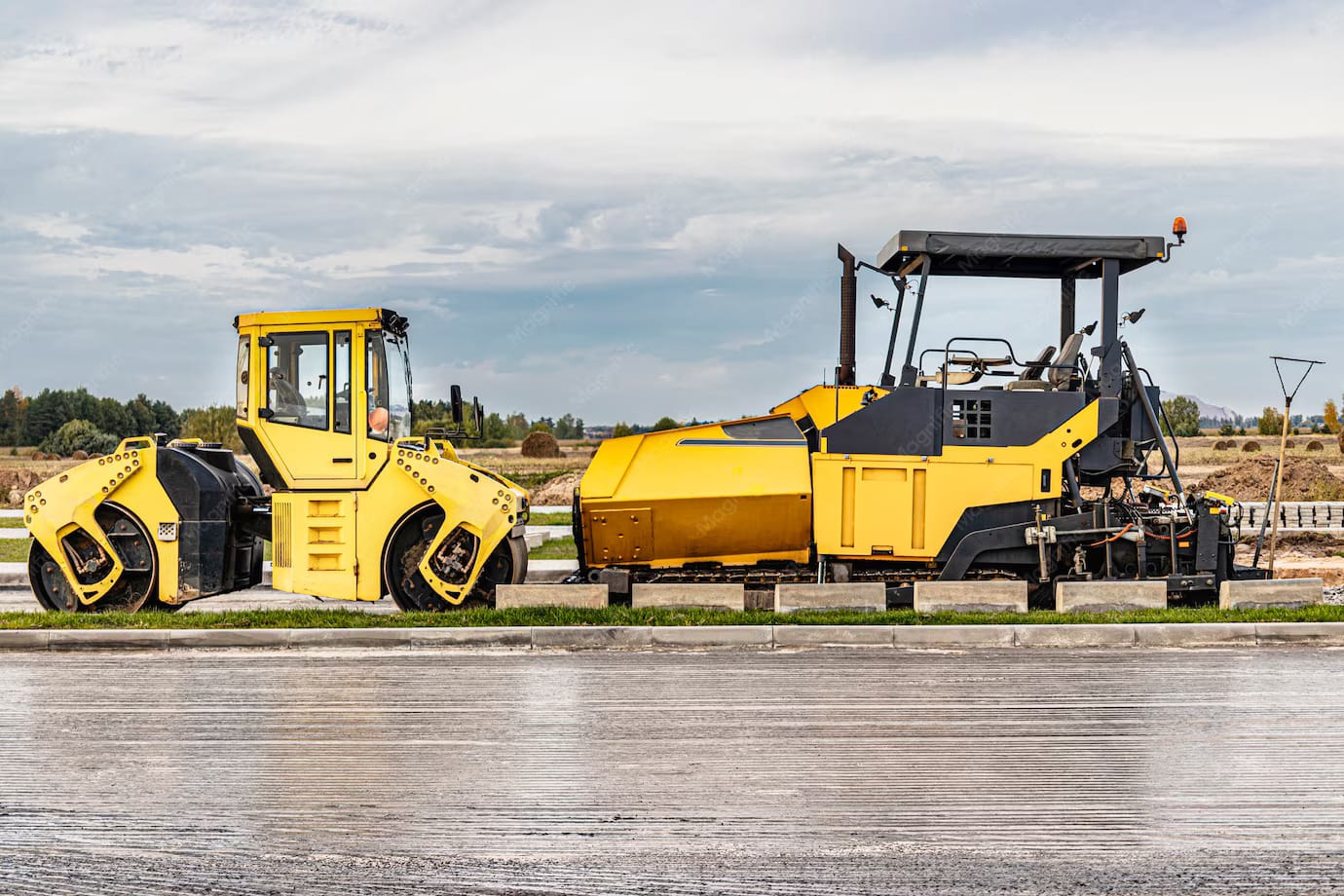
Asphalt is placed in multiple lifts. For heavy-duty areas this usually means a strong base course followed by an intermediate course and a tighter surface lift. We use Norfolk-area VDOT approved industrial mix designs with high quality aggregates. Each lift is compacted to target density while the material is at the correct temperature, using steel drum and pneumatic tire rollers to lock in density and minimize future rutting.
Joint construction is critical for industrial work. We cut or heat and pinch longitudinal joints so they do not unravel under slow turning truck traffic. At dock doors and dumpster pads we often install thicker asphalt or reinforced concrete pads tied neatly into the asphalt to handle concentrated loads.
Material and Design Options for Industrial Asphalt Paving
Industrial sites are rarely one-size-fits-all. Precision Asphalt Norfolk offers several material and design options so the pavement matches how each part of your operation actually works.
For extremely heavy or constant truck loading, we typically recommend full-depth asphalt sections or a thicker asphalt over a stabilized base, instead of thin asphalt over a basic stone layer. In areas with fuel or oil exposure, such as fleet yards and maintenance bays, we can specify mixes with modified binders that are more resistant to softening and stripping.
If you have forklift lanes or container stacking zones, we may tighten joint spacing or adjust the aggregate gradation to reduce surface movement and rutting. For high turning stress areas like cul-de-sacs, gates, or scale approaches, we often use a mix with a higher stone content for better shear resistance.
We can also phase work so that critical operations stay open. For example, we might install a heavy-duty lane for inbound trucks in one phase, then shift traffic so we can rebuild outbound lanes. When necessary we coordinate with local ready-mix suppliers and utility companies if portions of the site require combined concrete and asphalt solutions, such as concrete dumpster pads integrated into an asphalt yard.
Common Problems on Norfolk Industrial Sites and How We Prevent Them
Industrial pavements in Norfolk and the broader Tidewater region tend to fail in predictable ways, usually linked to poor design for heavy trucks, drainage issues, or weak supporting soils. Precision Asphalt Norfolk focuses on preventing these issues before they start.
One common failure is rutting in wheel paths where loaded trucks queue at gates or docks. This usually traces back to thin sections or mixes intended for car traffic. We prevent this by thickening the structural section and using high stability industrial mixes in all queuing and turning zones.
Another frequent issue is alligator cracking around catch basins and in low spots that hold water after storms. Norfolk’s heavy rains and flat grades make this worse. We address this with careful grading changes, reworking or adding inlets where needed, and making sure the stone base is thick and well compacted around structures so it does not settle.
Edges that break down under repeated truck traffic are also common, especially where trailers ride close to the pavement edge. Our crews often detail wider paved shoulders or reinforced edges in those zones, plus we advise on truck routing and striping layouts that keep the heaviest wheels where the pavement section is strongest.
For industrial clients near the port and along the Elizabeth River, salt exposure and high groundwater can accelerate stripping and subgrade pumping. Where appropriate we specify drainage layers, edge drains, or undercut and replacement with more suitable materials to keep the pavement structure dry and stable.
Cost Factors for Heavy-Duty Asphalt Paving Projects
Industrial asphalt paving costs are tied far more to what is under the surface than the visible blacktop. Precision Asphalt Norfolk is upfront about the main drivers so you can budget accurately and compare proposals on equal terms.
Key cost factors include pavement thickness, quality and depth of stone base, mix type, and subgrade repair needs. A loading yard built for loaded tractor-trailers might need twice the asphalt thickness of a light-duty parking lot. Using a high stability industrial mix costs more per ton than a standard parking lot mix, but saves money over time by avoiding early rutting and replacement.
Subgrade and drainage often have the biggest impact on price in Norfolk. If we discover soft clays or old buried debris from previous industrial use, we may recommend undercutting and replacement, stabilization, or geotextile reinforcement. While that adds upfront cost, it also prevents the type of failure where your pavement looks fine for a year then starts to settle and crack around heavy traffic lanes.
Phasing, access maintenance, and required off-hours work also influence price. Keeping an active terminal, warehouse, or utility yard operating while reconstructing the pavement takes more labor and planning, but we typically find staging options that balance cost with your operational needs. Our proposals outline these factors clearly so you can see where your investment is going.
Why Industrial Clients Across Norfolk Choose Precision Asphalt Norfolk
Heavy-duty and industrial asphalt paving is not an add-on service for us, it is core to what we do. Precision Asphalt Norfolk has paved and reconstructed truck yards, warehouses, municipal facilities, and utility sites across Norfolk and the surrounding Hampton Roads region.
Our crews understand how industrial facilities operate. We conduct pre-construction meetings with your operations staff to plan truck detours, staging areas, and safety zones. On many projects we work in windows between shifts or overnight to minimize disruption, then return the site to service by the next day whenever possible.
We are familiar with local permitting and coordination needs, from Norfolk city requirements to working around port, rail, or utility constraints. This local experience helps avoid delays or change orders that appear simply because a contractor did not understand how your facility connects to the larger transportation or utility network.
Most importantly, we stand behind our industrial work. We design for the real loads you describe, not theoretical light-duty conditions. When we recommend a heavier section, it is because we have seen what happens on similar Norfolk sites that were underdesigned. If you are planning a new facility or need to rehabilitate a failing industrial yard, our team can inspect your site, provide options with clear pros and cons, and build a pavement that is ready for heavy use from day one.