Home › Road, Street, and Municipal Paving
Keep traffic moving smoothly with professional road paving in Norfolk, VA. We pave and resurface neighborhood streets, access roads, and municipal routes using high-quality asphalt mixes and proper traffic control.
Precision Asphalt Norfolk provides professional road paving throughout Norfolk, VA, Virginia and the surrounding area. Our licensed, insured crew delivers safe, clean, on-time work with a free estimate before anything begins. Call (757) 908-3635 or request your free quote.
Road Paving in Norfolk, VA With Real-World Engineering
When a road or municipal street in Norfolk starts to crack, ravel, or rut, it is not just unattractive, it becomes a safety and maintenance problem for the city or private owner. Precision Asphalt Norfolk focuses on road paving that is tailored to the traffic, drainage, and soil conditions we see every day in Hampton Roads, not a generic one-size-fits-all approach.
Every project starts with a site walk and traffic assessment. We look at who uses the road (residential neighborhood, bus route, industrial trucks, port traffic), how often it is loaded, and what kinds of failures are already visible. Alligator cracking across wheel paths, standing water at low spots, or ruts at intersections each point to different structural issues. In Norfolk, we also pay close attention to nearby tidal creeks, old utility trenches, and tree roots, since these can weaken the base under the asphalt.
From there we decide together whether you need a full-depth reconstruction, milling and repaving, or targeted patching with an overlay. For a municipal collector street or subdivision road, we might specify a multi-layer system with a compacted stone base, a strong asphalt base course, and a smoother surface course. For a light-traffic access road we may be able to rehabilitate the existing base and put your budget into a thicker surface lift instead. Our goal is to match the structure of the pavement to how the road is actually used so you are not paying for unnecessary thickness or accepting something too thin that will fail early.
Step-by-Step: How We Build and Rebuild Roads and Streets
Road paving is more than just putting down blacktop. Precision Asphalt Norfolk follows a clear process so you know what to expect and why every step matters.
1. Evaluation and coring: On larger roads we often take pavement cores and test the existing base. This tells us how thick the old asphalt is and whether the stone base is stable or saturated. In Norfolk, where some streets sit on older fill or marsh soils, this step helps avoid surprises later.
2. Grade and drainage planning: Before machines arrive we set target elevations and cross slopes, typically around 2 percent so water sheds quickly to the curb or ditch. We confirm that driveways, ADA ramps, and manhole covers will match the finished height. Poor drainage is one of the fastest ways to ruin otherwise good asphalt.
3. Milling or excavation: If we are rehabbing an existing road, a milling machine grinds off a controlled thickness of old asphalt so we can keep curb reveal and drainage patterns. For full reconstruction, we remove the pavement and any failed base down to firm subgrade. Soft spots are undercut and replaced with stone so they do not later turn into dips or potholes.
4. Base installation and compaction: We place crushed stone (often VDOT 21B or similar) in lifts and compact it with vibratory rollers to reach dense, uniform support. In areas with weaker coastal soils we may add extra base thickness or use geotextile to separate the stone from the clay subgrade.
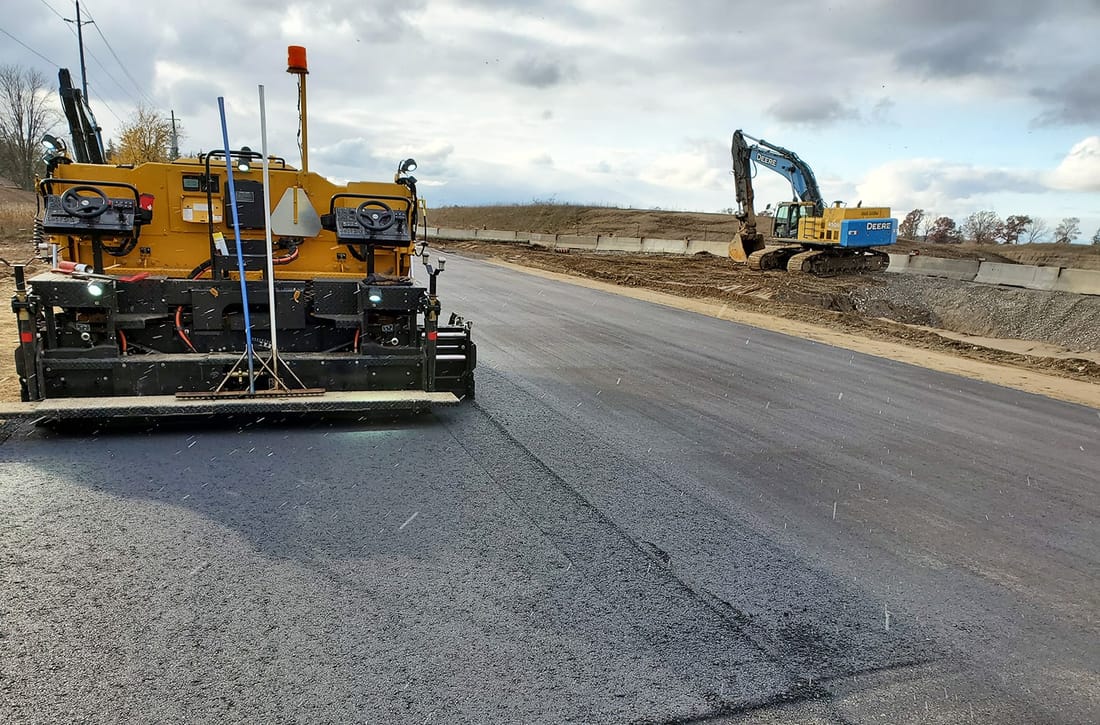
5. Asphalt paving in lifts: We typically install at least two asphalt lifts for roads. A base course uses a slightly coarser mix, placed thicker for strength. The surface course uses a finer mix for smoothness and better contact with tires. Our paver sets a consistent mat thickness, and steel drum and pneumatic rollers compact to target density while the mix is still at proper temperature.
6. Joints, transitions, and striping: We pay special attention to joints between new and old pavement, around manholes, and at intersections so you do not feel a bump every time you pass through. After cure time, we add pavement markings and symbols to city or VDOT standards so the road can reopen safely.
Materials, Mix Designs, and Options for Norfolk Roadways
Not all asphalt is the same. For road paving in Norfolk, mix choices and details can greatly affect performance and cost over time. Precision Asphalt Norfolk works with local plants to select mixes that stand up to heat, moisture, and traffic while meeting VDOT or municipal specifications.
For neighborhood streets and private access roads, a standard surface mix with 3 to 4 inches total asphalt (in one or two lifts) over a properly compacted stone base is often enough. For routes that see repeated trash trucks, delivery vehicles, or buses, we may recommend a thicker structure with a stronger base mix and possibly a higher performance binder that resists rutting during summer heat.
In some municipal locations we use polymer-modified asphalt to add elasticity and resist cracking where there are frequent stop and start movements, like at signalized intersections or bus stops. On grades or at tight curves we may adjust the aggregate structure of the mix for better skid resistance, especially important in coastal Norfolk where roads can get slick during sudden thunderstorms.
You also have choices about surface texture and appearance. A finer surface mix delivers a smoother, quieter ride for residential streets, which homeowners often prefer. On low-speed municipal roads and parking-adjacent streets, we sometimes recommend a slightly coarser texture that improves traction and drains water more quickly.
Because Norfolk sits in a coastal climate with frequent freeze-thaw cycles, we plan joints and edges to minimize water infiltration. This can include sealing curb joints, tight compaction along the edges, and in some cases edge drains on problem segments. Our mix and detail decisions always balance upfront cost with expected service life so the total life cycle cost makes sense for your budget.
Costs, Timelines, and Common Road Paving Challenges
Budgets for road paving in Norfolk can vary widely, and it helps to understand what drives cost. Precision Asphalt Norfolk builds estimates around four major factors: existing condition, structural design, access, and traffic control.
Existing condition is often the biggest variable. A simple mill and overlay on a sound base is significantly less expensive than a full-depth reconstruction with base undercuts and stabilization. If we discover widespread base failure, saturated soils, or long stretches of utility trench settlement, we will walk you through repair options that make sense piece by piece rather than applying the highest cost solution to every foot of road.
Structural design and thickness also affect cost. Heavier traffic routes, bus corridors, or industrial access roads require thicker asphalt and stronger bases, which adds material and time. We often prepare an alternate design that shows what you gain in years of service life by increasing thickness slightly so you can compare options clearly.
Access and staging matter around Norfolk because many streets are narrow or lined with parked cars, and some routes are the only way in or out of a neighborhood. Creating detours, flagging operations, and off-peak schedules for busy roads can add to cost but may be necessary to keep traffic moving and maintain emergency access. We coordinate with city staff or your property manager so residents and businesses have clear notices about closures and paving windows.
Common challenges include hidden soft spots, old utilities at shallow depths, or surprise drainage issues. For example, on older Norfolk streets we sometimes uncover clay pipes or outdated storm drains that have undermined the base. Our crews are used to these situations and carry stone, saws, and temporary shoring solutions so we can stabilize the area and keep your schedule on track, then coordinate any utility work that needs to follow.
Timeline depends on scope, but a mill and overlay segment of a neighborhood road can often be completed in one to two days per block, including asphalt placement and initial striping. Larger collectors or municipal streets may be broken into phases over several nights to minimize disruption. We give you a project schedule in plain language so residents and drivers know exactly what to expect.
Working With Precision Asphalt Norfolk on Your Road or Municipal Project
Whether you are a city department, HOA, property manager, or owner of a private road, you need a paving contractor who understands Norfolk regulations, permitting, and on-the-ground realities. Precision Asphalt Norfolk is familiar with local standards, VDOT specifications, and the coordination needed for school zones, bus routes, and emergency access.
On municipal and public projects, we can assist with pre-paving meetings, traffic control planning, and communication materials for residents. For HOAs and private streets, we help you prioritize segments based on condition so you can phase improvements over several budget cycles rather than trying to fix everything at once. We often start by mapping the road network, rating each section, and preparing a simple, understandable plan and cost range for the next 3 to 5 years.
Before we pave, we clarify details like curb ramp compliance, tie-ins to driveways, and any special needs such as school bus loading areas or heavy delivery zones. During construction, our superintendent stays on site to adjust sequencing around trash pickup, mail delivery, or emergency access so life can continue as normally as possible.
After paving is complete, we walk the site with you to confirm drainage, surface smoothness, and markings. We also discuss basic maintenance that keeps your investment performing, such as limiting heavy loads during the first few days, routine crack sealing, and monitoring for any early settlement near trenches or structures. Our goal is straightforward: build a road or street in Norfolk that holds up to your real-world traffic and weather, and communicate with you clearly from the first site visit through final striping and beyond.